What is Echolalia in Autism? Understanding the Meaning, Types, and Communication

December 15, 2025

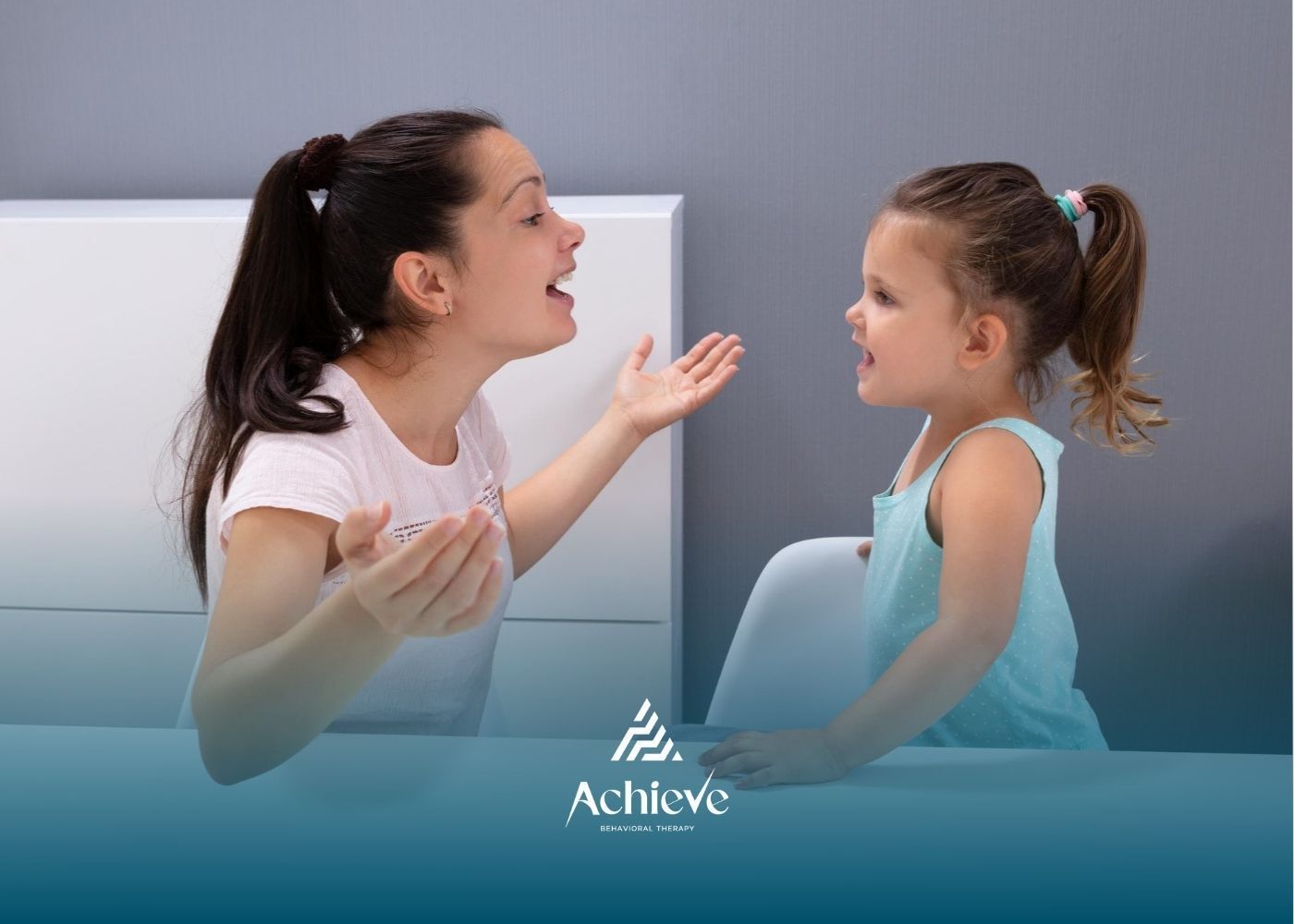
Echolalia is when a child repeats words, phrases, or sounds they’ve heard — either right away or later on. In autism, echolalia is very common and often serves an important purpose. While it may seem unusual at first, it’s actually a communication tool for many children on the autism spectrum.


Understanding Echolalia

Echolalia can help kids process language, practice speech, self-regulate, or express needs when they don’t yet have the right words. Instead of seeing it as “just repeating,” it’s helpful to think of it as a step toward meaningful communication.


Two Types of Echolalia

Immediate echolalia
The child repeats something right after hearing it. Example: You say, “Do you want juice?” and they echo, “Want juice?”


Delayed echolalia
The child repeats a phrase they heard hours, days, or even weeks earlier. This could be a line from a show, a book, or something said during a past routine.


Why Echolalia Happens

  • Practicing language
  • Coping with anxiety or sensory overload
  • Requesting something familiar
  • Trying to communicate a need or emotion
  • Processing new information


Echolalia is not “wrong.” It’s often a bridge that helps children move toward more independent speech.


How to Help Children Who Use Echolalia

With the right support, echolalia can be shaped into functional, purposeful communication. Here are simple strategies:


Model Short, Simple Language

Offer clear phrases your child can easily imitate and use meaningfully.


Give Visual Supports

Pictures, gestures, or written cues help kids understand routines and express themselves more easily.


Acknowledge the Message

Look beyond the repeated phrase. Are they asking for something? Showing excitement? Trying to avoid a task?


Use Fill-in-the-Blank Prompts

This encourages flexible speech.
Example: “I want ___.”


Work With an ABA Therapist

ABA therapy helps identify the function of echolalia and teaches children how to build new language skills at their pace.


Support From Achieve ABA

If your child uses echolalia and you’re unsure how to support their communication, Achieve ABA can help. Our team specializes in understanding behavior, language development, and individualized learning.


We offer:


Achieve ABA proudly serves families across New Jersey and North Carolina with compassionate, evidence-based care.


Want expert guidance for your child’s communication?
Reach out to
Achieve ABA to connect with a supportive team.


FAQs

  • Is echolalia normal in autism?

    Yes. It’s a very common communication behavior and often an important step in language development.


  • Will echolalia go away?

    Many children naturally reduce echolalia as they build more functional language. With support, they learn to use words in meaningful ways.


  • Should I stop my child from echoing?

    Not necessarily. Instead, use it as an opportunity to model helpful phrases and support communication growth.


Sources:

  • https://pmc.ncbi.nlm.nih.gov/articles/PMC9997079/
  • https://link.springer.com/article/10.1007/s40474-024-00311-0
  • https://onlinelibrary.wiley.com/doi/10.1111/1460-6984.12931
  • https://www.oxfordcbt.co.uk/echolalia-autism/
  • https://my.clevelandclinic.org/health/symptoms/echolalia

Need Support?

We're Here to Help!

Our experienced team is ready to assist you. Reach out today to discuss how we can support your child's development and well-being.

Get started with expert ABA therapy today.

ABA therapist working with a child using blocks during an ABA therapy session.
December 15, 2025
ABA therapy not working as expected can be stressful for families. Learn why progress in ABA may slow and what parents can do to help therapy move forward.
A BCBA supporting early learning through play with a young child during ABA therapy session.
December 15, 2025
Structured play in ABA therapy helps children with autism build communication and social skills through fun, guided activities that support real-life progress.
Elementary classroom with children with autism engaged in learning activities.
December 15, 2025
Discover evidence-based ABA classroom strategies that improve behavior and support academic & social success for autistic children and diverse learners.
Parents speaking with an ABA therapist during a parent training session.
December 14, 2025
Parent training is a required part of ABA therapy for autism. Learn how Achieve ABA supports families in New Jersey and North Carolina every step of the way.
ABA therapy using music and play to support communication skills
December 14, 2025
Explore the benefits of music for autistic kids, including support for language, emotional regulation, daily routines, and positive social engagement at home.
ABA therapist supporting a child during a learning activity.
December 14, 2025
Learn about common obsessions in autism, why special interests develop, and how parents can support healthy balance while respecting a child’s passions.
ABA therapist supporting a child during a learning activity.
December 14, 2025
Learn what the first line of therapy for autism is and why early intervention and ABA therapy are often recommended for young children after diagnosis.
A BCBA practicing ABA strategies during in-home ABA therapy.
December 14, 2025
Learn about common obsessions in autism, why special interests develop, and how parents can support healthy balance while respecting a child’s passions.
Child with autism wearing a paper astronaut helmet and holding a yellow star.
December 8, 2025
Learn simple, supportive ways to handle repetitive behaviors in autism. Understand triggers, teach coping skills, and use gentle redirection that works.
Show More