


A Sensory-Friendly Halloween: How to Help Your Autistic Child Enjoy Trick-or-Treating
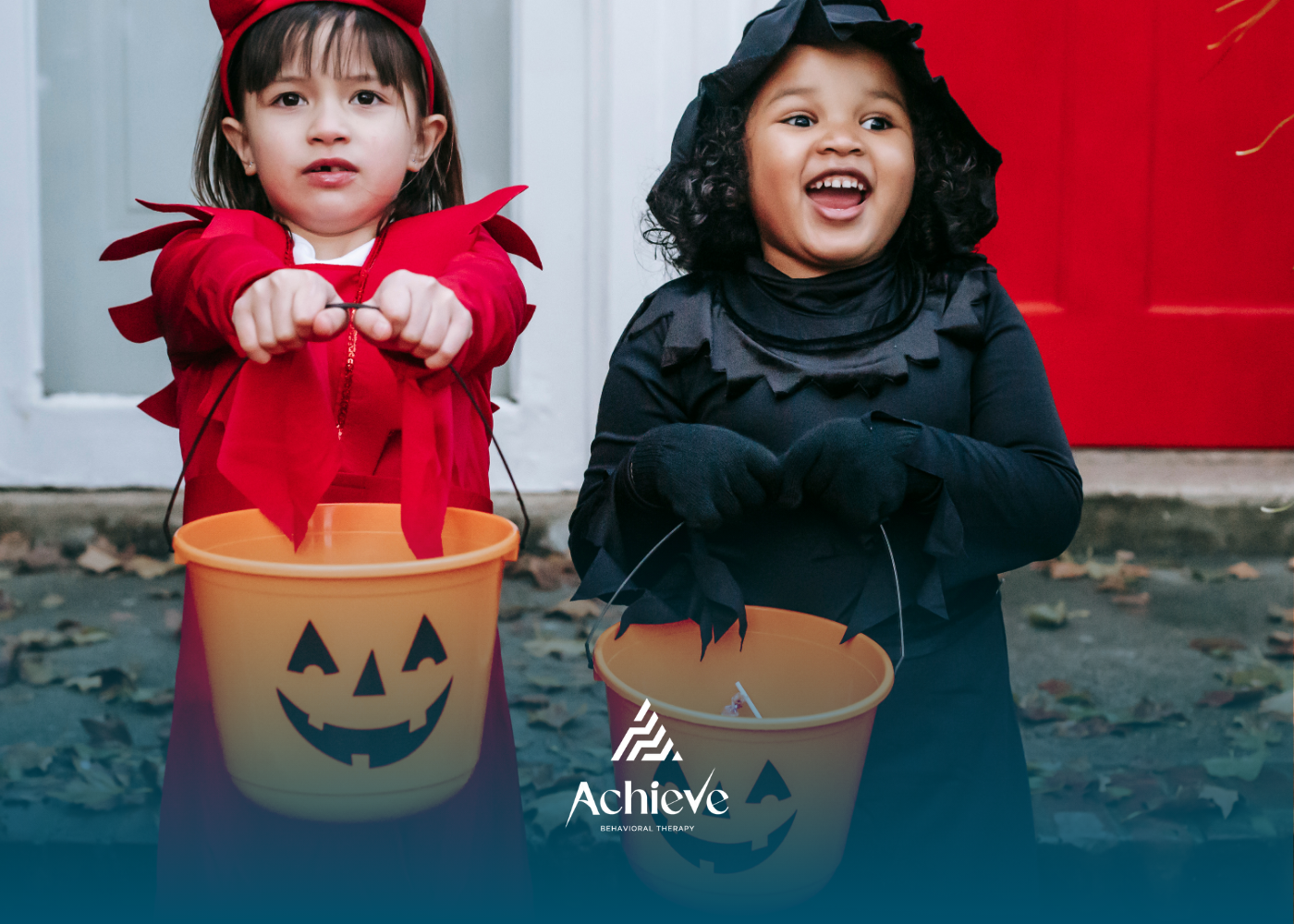
A sensory-friendly Halloween for an autistic child works best when parents plan around three things: sensory load (costumes, lights, noise), social load (the trick-or-treat script and unfamiliar faces), and the exit plan. Start six to eight weeks before October 31. Pick a soft, mask-free costume. Practice the script with a social story and role-play. Map the route to avoid scary decorations. Build a safe-word for early exit. The families who treat Halloween as a skill-building event — not just a candy event — are the ones whose kids come home smiling.
October 31 is one of the most overstimulating nights on the calendar. Bright lights, costumed strangers, doorbells, motion-activated zombies, sugar, late hours, and an unspoken script that most kids absorb without instruction — Halloween bundles every common sensory and social trigger into one evening. For autistic kids, that combination can tip from "fun" to "meltdown" in minutes. The good news: every trigger on that list is predictable. With the right prep, the right costume, and the right exit plan, Halloween can be a great memory. This guide walks through how to manage the night without losing the magic.
Why Halloween Overwhelms Autistic Kids
Halloween is hard for a lot of reasons stacked on top of each other.
- Costume sensory load. Polyester fabrics, itchy seams, tight elastics, masks, face paint, and hot synthetic layers are a tactile nightmare for kids with sensitivities.
- Visual and auditory overload. Strobe lights, fog machines, motion-activated screamers, and crowds of moving costumed bodies hit at once.
- Social scripting demands. Knock, wait, say "trick or treat," accept one piece of candy, say "thank you," leave. Five steps. Most autistic kids haven't been taught the script formally.
- Strangers in scary outfits. Faces are hidden, voices are muffled, behavior is unpredictable.
- Schedule disruption. Dinner is rushed, bedtime is late, and the route is unfamiliar.
- Sugar and food anxiety. A bag of unfamiliar candy can produce stress instead of excitement, especially for kids with food rules.
These same triggers can show up earlier in the year too — sometimes as an early sign of autism — when a child melts down at birthday parties, parades, or noisy malls. Halloween is the most extreme version of all of those rolled into one night, which is why it's a useful test case for everything ABA teaches about regulation and transitions.
Practice Trick-or-Treating with a Social Story and Role-Play
The single most underused tool is rehearsal. Autistic kids do best with the trick-or-treat script taught explicitly and practiced for weeks.
The full script:
- Walk up to the house.
- Knock or ring the doorbell once.
- Wait quietly.
- When the door opens, say "trick or treat."
- Take ONE piece of candy from the bowl.
- Say "thank you."
- Turn and walk back to the sidewalk.
How to practice:
- Read a Halloween social story daily, starting six weeks out. Use real photos of your own street, your own porch, and your child in costume.
- Role-play the script using stuffed animals or family members as the door-answerer.
- Rehearse the "take ONE piece" step explicitly. Without it, many kids reach for the whole bowl.
- For nonspeaking kids, prepare an AAC device or a small card that reads "I'm trick-or-treating!" so the script still works without forced speech.
Knowing how to manage the script in advance turns the porch from a stressful unknown into a familiar routine.
Costume Comfort and Sensory-Friendly Alternatives
The costume is the single biggest source of Halloween meltdowns. The rule is comfort first, theme second.
What works for most autistic kids:
- Soft cotton or fleece base layers instead of polyester. Pajamas-as-costumes are a low-key win.
- No masks. Hidden faces and restricted vision are a regulation killer.
- Face paint only if tested in advance — and only on small areas like the cheek or nose.
- Tags removed before the first fitting.
- Velcro closures instead of zippers and tight buttons.
- A familiar shirt worn underneath as a buffer against rough seams.
- Removable accessories (cape, ears, hat) the child can shed mid-night without losing the look.
Dress rehearsals two weeks before Halloween give you time to spot fabric issues, swap pieces, and let your child build tolerance through gradual exposure. Five minutes the first time. Ten the next. Half an hour the week before. If you're seeing subtle physical cues during these rehearsals — fidgeting at seams, covering ears, tugging at sleeves — those are the same sensory signals covered in our guide to subtle signs of sensory overload. Catch them in October, not December.
The "Blue Bucket" and Teal Pumpkin Explained
Two color-coded symbols circulate every Halloween. They mean different things.
Teal pumpkin = food allergy and non-food friendly. A teal pumpkin on a doorstep signals the household offers non-food treats — glow sticks, stickers, small toys — instead of (or alongside) candy. The Teal Pumpkin Project, run by FARE, publishes an interactive map each October of participating households. Many families use these stops as sensory-friendlier waypoints in a route.
Blue bucket = sometimes used to signal the child trick-or-treating has autism. The intent: candy-givers know the child may not speak the script, make eye contact, or respond as expected. The blue bucket is not officially recognized by any major autism organization, and it's debated within the autism community. Some parents find it useful for communication. Others find it stigmatizing or worry it can identify a child to strangers. There is no "correct" answer, and there is no requirement to use one.
Knowing what each color means is part of what to do as parents in the lead-up to Halloween — so the decision is informed rather than reactive.
Build an Exit Plan and a Safe-Word
Plan the exit before you need it. Every trip outside should have a defined off-ramp.
- Agree on a safe-word or hand signal that means "I need to stop." Practice it during the week.
- Build in scheduled breaks every 15 to 20 minutes — sit on a bench, drink water, breathe.
- Carry a small kit: water, a fidget, headphones, a familiar snack, an extra layer.
- Park or position your home within view of the route so the off-ramp is short.
Signs your child is hitting the wall:
- Increased stimming or self-soothing.
- Sudden silence after being verbal.
- Covering ears or eyes.
- Refusing to move or refusing to leave.
- Repetitive questions.
When you see these, the night is done. Ending early with three pieces of candy is a better outcome than pushing through to a meltdown on a stranger's lawn.
Low-Sensory Alternatives
Door-to-door trick-or-treating is not the only Halloween. For some autistic kids, it's not the right one. Calmer options:
- Trunk-or-treat events — church and school parking lots gather decorated trunks in one contained area. Less walking, more predictability.
- Mall trick-or-treating — indoor, climate-controlled, well-lit, no spooky decorations. Typically afternoon.
- Sensory-friendly community events — many cities now host quiet Halloween events with no jump scares, lower music, and reserved hours.
- Home Halloween parties — a small group of familiar friends in your living room, with chosen food and predictable activities.
- Reverse trick-or-treat — your child stays home and hands out candy from a comfortable spot at the door, then trades for a small toy at the end of the night.
None of these is a downgrade. They're parallel paths to the same goal: your child having a good Halloween on their own terms.
How ABA Skills Like Requesting and Transitions Help on the Night
Everything Halloween demands — staying regulated in a high-stimulus environment, transitioning between activities, communicating needs to strangers, tolerating delays, asking for breaks — is a skill ABA actively builds throughout the year.
A few examples of how everyday ABA targets translate to Halloween:
- Requesting (manding): Your child can ask for a break, ask for water, ask to leave, or ask for a different candy without melting down.
- Tolerating "wait": The pause between knocking and the door opening is a wait. Kids who've practiced waiting at home handle the porch better.
- Transitions: Moving from one house to the next, from sidewalk to door, from outside to inside — these are micro-transitions ABA practices in every session.
- Receptive language: Following short directions ("hold my hand at the corner") in a noisy environment.
- Self-regulation: Using a tool (headphones, fidget, deep breath) when overwhelmed rather than escalating.
The bigger pattern: skills that look small in a clinic session — saying "all done," waiting two minutes, switching activities on cue — are exactly the skills that hold the night together when the lights and noise and unfamiliar faces stack up.
Halloween Candy and Food Rules
Many autistic kids eat a narrow range of preferred foods. A pillowcase of unfamiliar candy can produce anxiety rather than joy.
What helps:
- Pre-screen the bag at home before letting your child dig in.
- Trade unfamiliar candy for a small toy or a familiar treat. The "Switch Witch" or "Candy Fairy" tradition works well.
- Offer one piece a day instead of unlimited access.
- Skip the candy entirely if your child prefers. Many kids are in it for the costume and the walk.
Halloween is one night. The skills that make it manageable — tolerating unexpected sensory input, following a social script, knowing when to call it — are built over months. Achieve Behavioral Therapy now serves families in Colorado, Georgia, Nebraska, and Arizona, alongside our existing teams in New Jersey and North Carolina. Talk to our team about building those skills before the next holiday catches you off guard.
Frequently Asked Questions
How do I prepare my autistic child for Halloween?
Start six to eight weeks early. Pick a sensory-friendly, mask-free costume. Read a Halloween social story daily. Hold costume dress rehearsals two weeks before. Practice the trick-or-treat script with stuffed animals. Walk the planned route in daylight a week before.
What is a sensory-friendly costume?
A costume made from soft, breathable materials (cotton or fleece), with no masks, no tight collars, no scratchy tags, and Velcro closures. Layering familiar clothing underneath helps with rough seams.
Is the blue bucket officially recognized for autism?
No. The blue bucket is a grassroots signal used by some families and is not endorsed by any major autism organization. Some parents find it useful, others find it stigmatizing. The decision is personal.
Sources:
https://www.foodallergy.org/our-initiatives/awareness-campaigns/living-teal/teal-pumpkin-project
https://www.autismbc.ca/blog/caregivers/the-blue-pumpkin-debate-what-you-need-to-know/
https://surpassbehavioralhealth.com/guides/sensory-friendly-halloween/
https://www.hopebridge.com/blog/halloween-costume-ideas-for-kids-with-autism-and-sensory-disorders/
https://www.autismspeaks.org/blog/halloween-tips-families-autistic-children
https://www.today.com/parents/essay/halloween-with-autistic-child-rcna177800
Need Support?
We're Here to Help!
Our experienced team is ready to assist you. Reach out today to discuss how we can support your child's development and well-being.
Get started with expert ABA therapy today.
Related posts