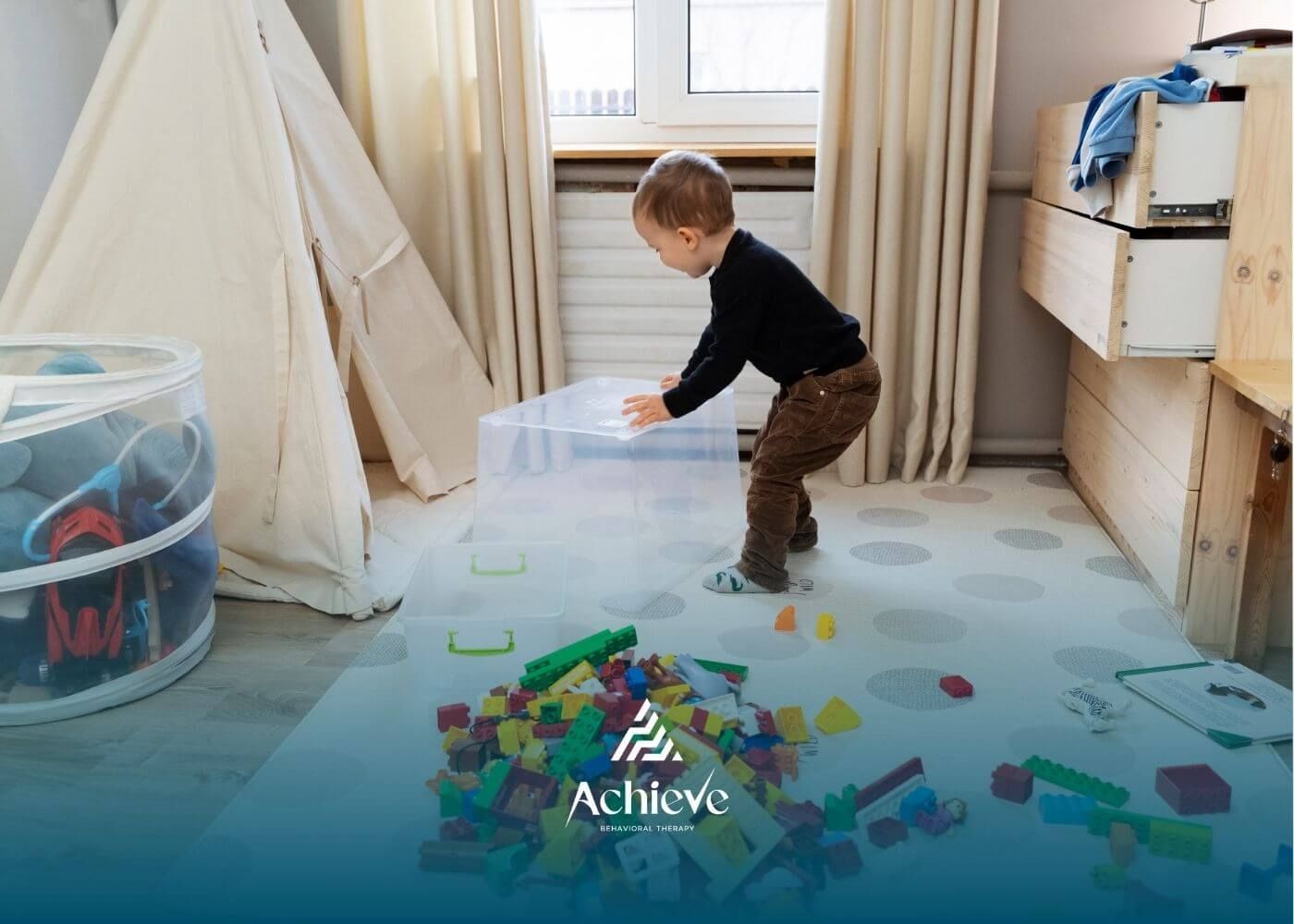
Why Do Autistic Kids Need Sensory Rooms?

November 28, 2025

Sensory rooms are specially designed spaces that provide calming, structured environments for autistic children. These rooms use tools like soft lighting, tactile objects, soothing sounds, and safe movement activities to help children regulate their emotions and manage sensory input.


Autistic kids often experience sensory overload from everyday environments; bright lights, loud noises, or crowded spaces can trigger stress and anxiety. A sensory room offers a retreat where they can regain focus, reduce stress, and practice coping strategies. These spaces also encourage exploration, creativity, and self‑expression, helping children build confidence and independence.


For families, educators, and therapists, sensory rooms are more than just calming spaces they are powerful tools that support learning and development. By integrating sensory experiences into therapy and daily routines, children can strengthen attention, communication, and social skills.


At Achieve Behavioral Therapy, we serve and recognize the importance of sensory support in ABA therapy programs in New Jersey and North Carolina. Our team helps families create environments that nurture growth and well‑being.


Learn how our personalized ABA services and sensory‑based strategies can help your child thrive. Contact us today!


SOURCE:


https://pmc.ncbi.nlm.nih.gov/articles/PMC9340127/


https://www.reddit.com/r/Autism_Parenting/comments/1f8m5w3/sensory_room_at_home/


https://www.sciencedirect.com/science/article/abs/pii/S1750946724000370


https://www.cardiff.ac.uk/psychology/research/impact/sensory-room-guide-supporting-the-learning-and-wellbeing-of-autistic-children


https://nwcommons.nwciowa.edu/cgi/viewcontent.cgi?article=1431&context=education_masters

Need Support?

We're Here to Help!

Our experienced team is ready to assist you. Reach out today to discuss how we can support your child's development and well-being.

Get started with expert ABA therapy today.

A child and an adult sit on a colorful floor. The child plays while the adult watches.
January 15, 2026
​​​Learn who benefits most from ABA therapy and how it supports individuals with autism. Discover the key recipients and how personalized therapy promotes growth.
Woman smiles at a child with a backpack. They are outside a blue building, appearing to chat.
January 15, 2026
Learn what language disorder associated with autism means, common language challenges in ASD, and how communication differences are evaluated and supported.
Therapist assists a child walking on a course in a therapy room.
January 15, 2026
Learn whether ABA counts as mental health services and how it’s classified by insurers, Medicaid, and health systems for autism care.
Child hugs an adult close. The child has their face on the adult's chest. Window in the background.
January 8, 2026
Understand how children with autism form deep bonds and attachments. Explore common misconceptions and learn ways to strengthen your unique emotional connection.
Child looking intently at a tablet screen while resting on a bed with a pillow.
January 8, 2026
Explore the pros and cons of screen time for autism. Learn when an iPad is a helpful learning tool and how to manage use to prevent overstimulation and dependency.
Hands flipping through pages of a book, next to a pen.
January 8, 2026
Discover how to support bilingualism in children with autism. This practical guide offers strategies for teaching a second language while boosting communication.
Small, yellow house with brown shutters and green door. Located on green lawn with trees in the background.
January 8, 2026
Prepare your home for ABA therapy success. Get expert tips on setting up a workspace, organizing toys, and creating a positive environment for your child to learn.
Woman and toddler scooping from jar in kitchen.
January 8, 2026
Understand the prompt hierarchy in ABA therapy. Learn how using a system of least-to-most or most-to-least prompts helps children build independence and new skills.
Man and boy sitting on a white bench, looking at each other in a park.
January 7, 2026
Do children with autism talk differently? Yes—echolalia, monotone common. ABA support at Achieve Behavioral Therapy NJ/NC.
Show More