
What Is Pivotal Response Training? Definition, Strategies, and Examples

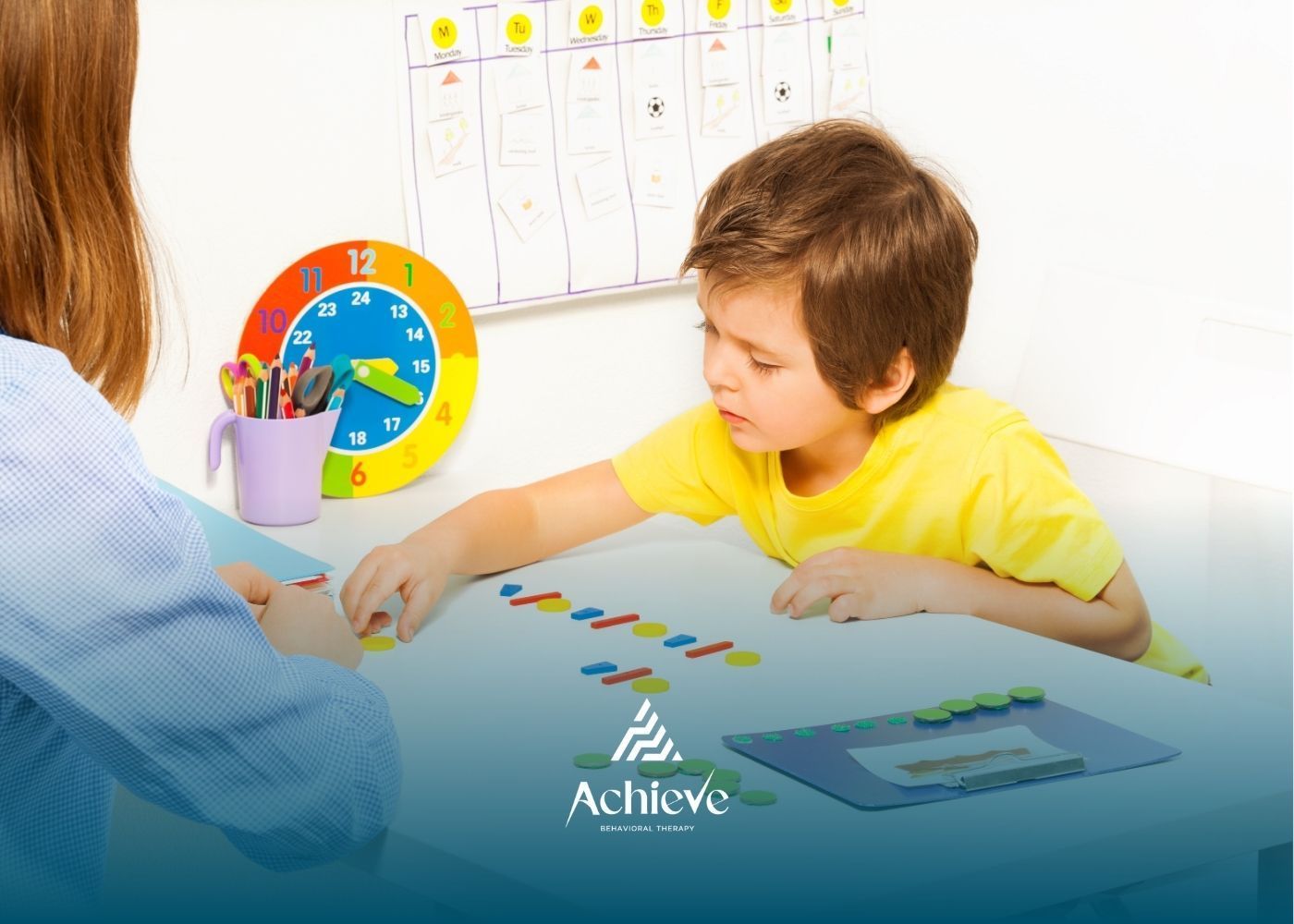
Pivotal response training (PRT) is a child-focused, play-based form of Applied Behavior Analysis (ABA) that targets key developmental areas — called pivotal skills — such as motivation, self-initiation, and response to cues.
By improving these pivotal areas, PRT aims to produce broad gains in communication, social behavior, and adaptive functioning in individuals with autism spectrum disorder (ASD). This naturalistic, evidence-based approach follows the child’s interests and incorporates learning into everyday activities rather than relying solely on structured drills.
What Is Pivotal Response Training? (Definition)
The pivotal response training definition refers to a behavioral intervention grounded in ABA that focuses on core or “pivotal” skills which influence many other behaviors across contexts. Instead of teaching isolated behaviors one at a time, PRT emphasizes motivation, initiations, responding to multiple cues, and self-management — areas believed to trigger wider improvements when targeted.
PRT is considered naturalistic because it uses real play, child-preferred activities, and everyday routines as the setting for learning. As a result, skills taught in PRT are more likely to generalize to settings like home, school, and community.
Core Principles of Pivotal Response Training
1. Child Choice and Motivation
PRT begins with the child’s interests. Therapists and caregivers let children select activities or toys, increasing motivation and engagement — key ingredients for learning. Natural reinforcers (like access to a desired toy) follow successful attempts at communication or social behavior.
2. Focus on Pivotal Areas
PRT targets four primary pivotal areas:
- Motivation — Encouraging the desire to communicate or engage
- Response to multiple cues — Helping children attend to varied environmental signals
- Self-initiation — Encouraging spontaneous communication or actions
- Self-management — Building independence and regulation over behavior
Improvement in these skills can lead to widespread gains in areas like language, social interaction, and adaptive behaviors beyond the specific teaching episodes.
How Pivotal Response Training Works in ABA Therapy
Naturalistic Approach
Unlike highly structured methods like Discrete Trial Training (DTT) that break skills into small, sequenced steps, PRT embeds teaching moments into play and daily routines. For example, a therapist may pause a game and prompt a child to request the next turn, using the actual activity as the teaching context. This makes reinforcement immediate and meaningful.
Parent and Caregiver Involvement
Research shows that parent-delivered PRT — with guidance and training — can increase spontaneous initiations and social communication in children with ASD. Programs that involve parents and caregivers help ensure strategies are generalized to home and community settings.
Pivotal Response Training Example
A pivotal response training example might involve a therapist playing with a child’s favorite toy car. When the child reaches for the car, the therapist pauses and uses a prompt like “car, please.”
If the child attempts the word or gesture, the therapist immediately hands the car back and resumes play. Over time, the child learns to request desired items spontaneously, strengthening communication within a natural routine.
This example illustrates how PRT uses child choice, natural reinforcement, and real context to teach pivotal skills.
Research Evidence for Pivotal Response Training
Studies suggest that PRT can lead to improvements in communication frequency, social initiations, and expressive language. In randomized controlled trials, children receiving PRT show greater gains in functional utterances and social communication compared with controls.
Systematic reviews also find that PRT is among the most studied naturalistic ABA interventions and shows positive effects on core areas of autism when implemented with fidelity.
Benefits of Pivotal Response Training
- Broader skill generalization: Skills learned during child-led play transfer more easily to real life.
- Increased motivation: The child’s interests drive engagement and responding.
- Parent-mediated strategies: Teaching parents to use PRT naturally extends learning into everyday life.
- Flexible implementation: PRT can be used in homes, clinics, schools, and community settings.
These benefits make PRT a valuable part of many ABA programs designed for children with ASD.
Pivotal Response Training (PRT)
- Therapist-led, structured drills
- Skills taught in isolation at a table
- External reinforcers (stickers, tokens)
- Focus on individual behaviors sequentially
- Child follows therapist's agenda
- Child-led, play-based, naturalistic
- Skills embedded in everyday routines
- Natural reinforcers (access to toys/activities)
- Focus on pivotal areas → broad gains
- Child's interests drive learning
Four Primary Pivotal Areas
How PRT Works in ABA Therapy
Naturalistic Approach
Teaching moments embedded in play and daily routines. The therapist pauses a game and prompts a request, using the activity itself as the teaching context.
Parent & Caregiver Involvement
Parent-delivered PRT increases spontaneous initiations and social communication. Training helps strategies generalize to home and community settings.
Child interest: Child reaches for favorite toy car.
Therapist pauses and prompts: "Car, please."
Child attempts word or gesture.
Natural reinforcer: Therapist immediately hands car back, play resumes.
Outcome: Over time, child learns to request spontaneously within natural routines.
This illustrates how PRT uses child choice, natural reinforcement, and real context to teach pivotal skills.
Research Evidence for PRT
Benefits of Pivotal Response Training
Broader skill generalization
Skills learned during child-led play transfer more easily to real life.
Increased motivation
The child's interests drive engagement and responding.
Parent-mediated strategies
Teaching parents extends learning into everyday life.
Flexible implementation
Can be used in homes, clinics, schools, and community settings.
Real Skills Through Natural Play
Pivotal response training offers a research-based, naturalistic way to support children with autism in learning critical social, communication, and adaptive skills. By focusing on pivotal areas like motivation and self-initiation, PRT creates a ripple effect of improvement across multiple developmental areas.
At Achieve Behavioral Therapy, we integrate PRT principles into individualized programs designed to match each child's strengths and interests. Our clinicians work closely with families to embed learning into daily activities — making progress functional, meaningful, and long-lasting.
Ready to explore PRT for your child?
Contact Achieve Behavioral Therapy to schedule an assessment and see how Pivotal Response Training strategies can be woven into your child's ABA program for real-world skill gains.

© 2026 Achieve Behavioral Therapy — Evidence-based PRT resources for families and professionals.
Conclusion — Real Skills Through Natural Play
Pivotal response training offers a research-based, naturalistic way to support children with autism in learning critical social, communication, and adaptive skills. By focusing on pivotal areas like motivation and self-initiation, PRT creates a ripple effect of improvement across multiple developmental areas.
At Achieve Behavioral Therapy, we integrate PRT principles into individualized programs designed to match each child’s strengths and interests. Our clinicians work closely with families to embed learning into daily activities — making progress functional, meaningful, and long-lasting.
Ready to explore how Pivotal Response Training can support your child’s growth?
Contact Achieve Behavioral Therapy to schedule an assessment and see how PRT strategies can be woven into your child’s ABA program for real-world skill gains.

Sources:
- https://raisingchildren.net.au/autism/therapies-guide/prt
- https://en.wikipedia.org/wiki/Pivotal_response_treatment
- https://www.verywellhealth.com/autism-overview-4582004
- https://pmc.ncbi.nlm.nih.gov/articles/PMC5488784/
- https://pmc.ncbi.nlm.nih.gov/articles/PMC9095862/
- https://www.autismspeaks.org/pivotal-response-treatment-prt
- https://www.2minutemedicine.com/pivotal-response-treatment-improves-social-communication-in-children-with-autism-spectrum-disorder/
What are the 4 steps of DTT?
Discrete Trial Training (DTT) is a structured ABA teaching method where skills are broken into small parts and taught systematically. While different sources describe components slightly differently, the basic four steps of DTT are:
- Cue/Instruction – The therapist gives a clear instruction.
- Response – The learner attempts the response.
- Consequence – Correct responses are reinforced; incorrect ones are redirected.
- Inter-trial Interval – A short pause before the next trial.
This cycle creates repetition and clear reinforcement contingencies to support skill mastery in defined steps.
What is the difference between PRT and ABA?
Pivotal Response Training (PRT) is actually a type of ABA therapy but differs in its approach. Traditional ABA often uses structured teaching formats like Discrete Trial Training (DTT), where skills are broken into discrete parts and taught in controlled trials. In contrast, PRT is more naturalistic and child-directed. It targets pivotal areas of development like motivation and self-initiation, embeds teaching in play and everyday routines, and uses natural reinforcement — such as giving the child a desired item after a valid request — to promote broader skill gains.
What is a PRT and how does it work?
Pivotal Response Training (PRT) is a behavioral intervention based on ABA principles that focuses on improving pivotal behaviors — key skills that influence many areas of development. These pivotal areas include motivation, initiation, responding to multiple cues, and self-management. PRT works by following the child’s interests and using natural rewards (like access to a toy the child wants) to reinforce attempts. By focusing on these core areas, PRT aims to help children generalize skills across settings — not just in structured therapy sessions.
How to teach Pivotal Response Training?
Teaching pivotal response training involves embedding learning into natural, motivating activities and following these key steps:
- Child Choice – Let the child select a preferred activity or item.
- Use Natural Reinforcers – Reinforce with items directly tied to the child’s request or behavior.
- Prompt and Reward Attempts – Prompt communication or social initiations and reward all valid attempts.
- Increase Complexity Over Time – As skills improve, require progressively more complete responses before reinforcement.
By structuring learning this way — using play, interests, and real interaction — PRT promotes spontaneous communication and engagement that generalizes to everyday life.
Need Support?
We're Here to Help!
Our experienced team is ready to assist you. Reach out today to discuss how we can support your child's development and well-being.
Get started with expert ABA therapy today.