

Autism therapy services in New Jersey, North Carolina, Colorado, Georgia, Nebraska & Arizona
Watch your child Achieve more. Become more.
At Achieve Behavioral, we don't just help your child learn - we help them shine. From building key life skills to boosting confidence, we're here to unlock their full potential and watch them soar.
Watch them Achieve greatness, one step at a time.
"We switched to Achieve Behavioral after feeling lost in a larger agency, and the difference was night and day. The personalized attention, dedicated therapists and tailored approach helped my son make more progress in months than he had in years elsewhere!"
Leah,
Parent
Our autism services include
Children thrive best in familiar environments. Our in-home ABA therapy services allow therapists to work directly with your child in their everyday setting, incorporating real-life situations into learning.
Whether it's improving social cues, emotional responsiveness, communication skills, or self-care, our trained RBT's provide engaging, play-based therapy tailored to your child's needs.
Benefits of In-Home Therapy:
✔ Comfortable and familiar setting for children
✔ Customized sessions based on home routines.
✔ Parental involvement and training opportunities.
✔ Increased generalization of skills into daily life.
We partner with schools to provide ABA therapy in educational settings, giving children the support they need to succeed academically and socially. Our ABA professionals work alongside educators to develop individualized strategies tailored to each child's learning style.
Benefits of School-Based ABA Therapy
✔ Increased classroom engagement and participation.
✔ Support for behavioral and social challenges.
✔ Collaboration with teachers and staff for consistency.
✔ Development of essential academic and social skills.
Parent training & support
We believe that parental involvement is key to long-term success. Our ABA parent training equips caregivers with practical techniques to reinforce positive behaviors and therapy goals at home.
Parent Training Covers:
✔ Behavior management strategies.
✔ Communication skills and social interaction techniques.
✔ Developing independence in daily routines.
✔ Addressing challenging behaviors effectively.
Community Support
At Achieve Behavioral, our community support services are designed to help your child build confidence and independence beyond the ABA therapy session. By working with your child in real-world environments — including schools, after-school programs, and community activities — we help reinforce the skills they've learned and ensure they carry over into everyday life.

Where we serve
Achieve Behavioral Therapy delivers in-home, school-based, and telehealth ABA therapy to families across six states. Find services and coverage details for your area:
(Denver metro and the Front Range)
(serving northern and central NJ)
(Charlotte and surrounding areas)
(Atlanta and metro communities)
(Omaha, Lincoln, and beyond)
(Phoenix, Tucson, and across the state)
"At Achieve, we weren't just another case file. The therapists truly knew my child, adapted strategies to fit his needs, and worked with our family every step of the way. We've seen incredible growth!"
Jennifer Owens
Early intervention through ABA therapy lays the groundwork for long-term success by focusing on:
Improving communication:
Providing your child with the skills to express themselves clearly, helping them navigate their emotions and connect with others.
Strengthening social skills:
Facilitating meaningful relationships with peers and family, building confidence in social interactions and reducing isolation.
Setting up for lifelong success:
Establishing a solid foundation for academic achievement, personal growth, and social integration, preparing your child for a bright future.
Our personalized ABA therapy services are crafted to fit your child's specific needs. Grounded in proven, evidence-based strategies and delivered with care, we partner closely with families to ensure lasting progress.
Early intervention is more than just a choice - it's a transformative step toward your child's future success.
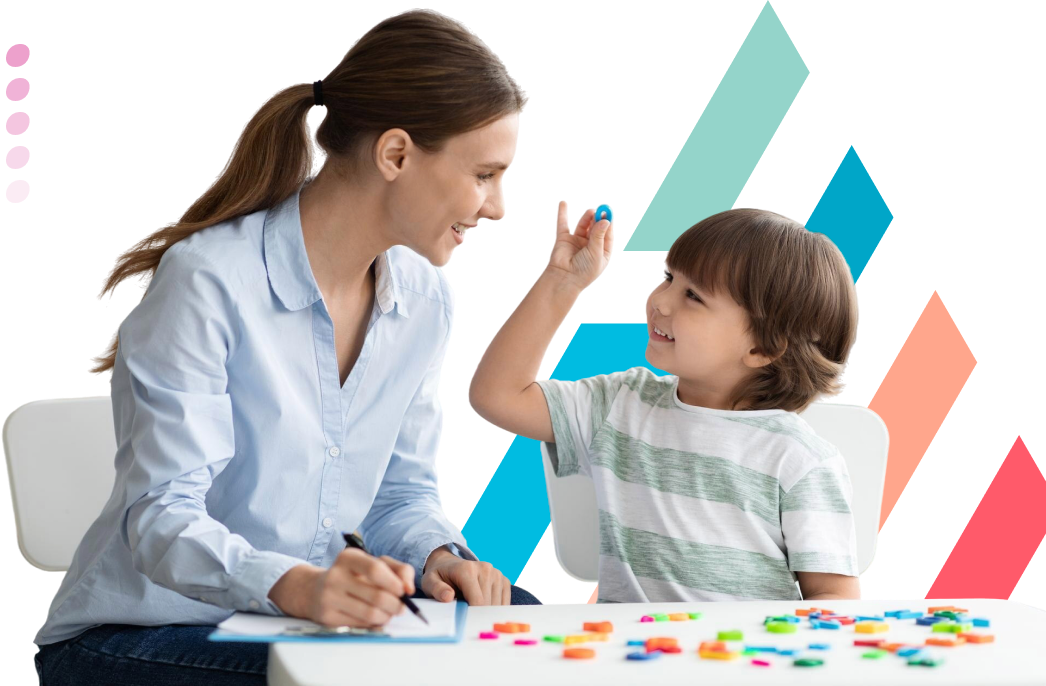
Where every child Achieves their best
Key areas where Achieve Behavioral therapy creates a lasting impact on your child's development:
In social interactions
During self-care
In community settings
At mealtimes
With family
During playtime

👋
Meet Sarah
Sarah, a bright and energetic 5-year-old, was struggling to connect with others. Diagnosed with Autism Spectrum Disorder (ASD), she faced challenges with verbal communication and social interactions, often feeling frustrated when unable to express her needs. Her parents were determined to help her build essential skills for a successful future and turned to Achieve Behavioral for support.
Our team focused on:
✔ Unlocking Communication - Expanding Sarah's vocabulary and teaching her to express herself with simple, clear phrases, boosting her confidence.
✔ Fostering Social Interactions - Strengthening her social skills through guided play and meaningful interactions, helping her build lasting relationships.
✔ Mastering Emotional Regulation - Equipping her with strategies to manage emotions, and handle frustrations more effectively.
Our approach:
At Achieve Behavioral, we saw Sarah's potential and partnered with her family to create a personalized therapy plan. Each session focused on helping her unlock communication, connect with others, and manage emotions, turning challenges into victories along the way.
🙌
The results:
Six months of focused, ABA therapy at Achieve resulted in remarkable progress. Sarah's communication blossomed - she began using words to express herself more frequently and effectively. Her social interactions became more natural, and she learned to navigate group play with greater ease.
Sarah's ability to manage her emotions improved significantly, allowing her to better handle transitions and everyday challenges.

Hear it from her parents:
"The progress we've seen in Sarah has been nothing short of incredible. Achieve Behavioral didn't just help her learn; they empowered her to thrive. We now see a confident, engaged little girl who is eager to communicate and connect. The team's dedication to her success has made all the difference in our lives."
Sarah's Parents
Frequently asked questions
What services does Achieve Behavioral offer?
We provide comprehensive ABA therapy services in New Jersey, North Carolina, Colorado, Georgia, Nebraska, and Arizona including autism assessments, in-home therapy, school-based support, and parent training. Each service is tailored to help children develop essential skills for daily life.
How does in-home ABA therapy work?
Our therapists work directly with your child in their home environment, using real-life situations to reinforce learning. This approach helps with communication, social skills, and behavior management in a comfortable, familiar setting.
Do you offer ABA therapy in schools?
Yes! We collaborate with schools to provide on-site ABA support, helping children succeed academically and socially while working closely with teachers for a consistent approach.
Why is parent training important?
Parent involvement is key to long-term progress. Our training programs equip caregivers with the tools to reinforce positive behaviors and extend therapy benefits beyond sessions.
How do I get started with Achieve Behavioral?
The process begins with an initial consultation, followed by an autism assessment (if needed). Once approved, we create a customized therapy plan and match your child with a dedicated therapist.
Still have questions?
Let's Achieve greatness together
It's time to see your child thrive in ways you never imagined. At Achieve Behavioral, we're here to guide them toward their brightest future, one breakthrough at a time.